Key takeaways
- An AI receptionist for a medical practice is a voice agent that answers calls, books into the practice's calendar or practice management system, confirms visits and hands anything clinical to staff.
- Vendors disagree on HIPAA: Retell says dental practices deploy under HIPAA with a self-service BAA portal, while SchedulingKit says it is not HIPAA compliant and does not sign BAAs.
- Under 45 CFR 164.502(e), a covered entity may disclose protected health information to a business associate only if it obtains satisfactory assurance that the associate will safeguard it.
- Outbound AI calls fall under the TCPA: FCC 24-17 says callers need prior express consent before a call that uses an AI-generated voice, absent an emergency purpose or exemption.
- Start with a narrow job on a narrow data set (name, phone, slot, visit type), then widen once the review passes.
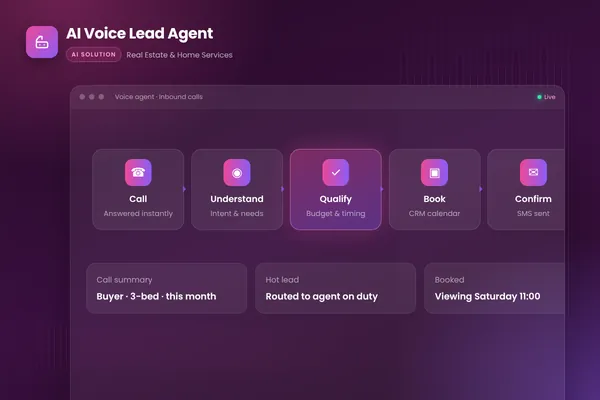
An AI receptionist for medical practices is a voice agent that answers the phone, books into your calendar or practice management system, confirms visits and hands clinical questions to staff. For 2027, the hard part is privacy, not booking: this post lists seven front-desk jobs, what each needs, and the HIPAA and FCC rules to check first. Vendor facts were read in November 2026.
For the wider picture, read our AI voice agents guide. For general buying mistakes, see 5 AI receptionist mistakes to avoid.
What is an AI receptionist for a medical practice?
It is software that talks to callers in a natural voice and does front-desk work through your systems. Retell says its agent "can book appointments straight into your practice management system" and names Dentrix, Open Dental and Eaglesoft. AI Front Desk says its agent "reads your calendar, offers open slots, and books on-call with SMS confirmation."
The agentic version does more than answer. It checks the schedule, books the slot, logs the call and hands off with context. A practice still decides which data the tool may touch, and that decision shapes everything below. BufferSol builds this pattern as a voice agent for lead calls and can adapt it to a front desk.
The 7 front-desk jobs an AI receptionist can take in 2027
Jobs one to four need little patient health data. Jobs five to seven are about keeping the agent inside safe limits. The order below runs from lowest to highest privacy risk, which is BufferSol view, not a published ranking.
- 011 AnswerPick up and say what it is
- 022 BookOffer open slots and confirm
- 033 ConfirmConfirm and reschedule visits
- 044 RemindSend reminders with consent
- 055 Limit dataCollect only what the tool may hold
- 066 Hand offPass clinical calls to staff
- 077 LogRecord every call and decision
BufferSol Technologies · buffersoltech.com
1. Can it answer the phone and tell callers what it is?
Yes, and the first job is to pick up every call and say it is an automated assistant. That removes the missed-call problem without asking the agent to decide anything clinical. Plivo's blog says missed appointments cost single physicians as much as $150,000 annually, a figure the page attributes to MGMA; we did not check MGMA directly, so treat it as a vendor-cited number.
Set the greeting and the limits before anything else. For the call itself, our post on conversational IVR versus an AI voice agent shows what changes when callers can speak in plain sentences. Choose this job first if callers hit voicemail after hours.
2. Can it book appointments into your calendar or practice system?
Yes, if it has a live connection to the system that holds your slots. SchedulingKit says "once the patient picks a time, the AI creates the booking," and Allo says it "books into the calendar your practice already uses: Google Calendar, Outlook, Calendly, or Cal.com." Retell's dental page names three dental practice management systems instead.
The difference is the integration target. A calendar tool only knows free and busy; a practice management connection knows visit types, providers and rooms. Ask which one your vendor means. Choose a calendar connection for a small practice with simple visit types, and a practice management connection when providers and rooms vary.
3. Can it confirm and reschedule visits on the same call?
Yes, and this is where a voice agent beats a form. Retell's page says the agent "confirms upcoming visits, answers reschedule requests in the same call". SchedulingKit says "your usual confirmation and reminder settings apply", which means the booking tool leaves confirmations to your own system.
Both are vendor claims, so test them on your own schedule. Our AI appointment setter post covers the same booking logic for sales calls. BufferSol view: let the agent move a slot only within rules you set (same provider, same visit length) and hand everything else to staff.
4. Should it send appointment reminders, and who consents?
It can, but reminders are the easiest job to automate and the least valuable one. Plivo's blog says "Reminder calls are the easiest workflow to automate and the least valuable." A reminder you already send by text or email through your own system needs no agent.
If the reminder is a call with an AI-generated voice, the FCC rule applies. In FCC 24-17, adopted February 2, 2024, the Commission says "callers must obtain prior express consent from the called party before making a call that utilizes artificial or prerecorded voice simulated or generated through AI technology." The same ruling says calls "require the prior express consent of the called party to initiate such calls absent an emergency purpose or exemption."
We did not check whether healthcare reminders fall under an exemption, or the ruling's status after 2024. Our TCPA and AI calls post explains consent in plain terms. This is not legal advice.
5. What patient data should the agent be allowed to collect?
Only what the tool is cleared to hold, and the vendors disagree on that. The comparison below uses each vendor's own wording.
| Vendor page | What it says | What follows for a practice |
|---|---|---|
| Retell | "Dental practices deploy under HIPAA with a self-service BAA portal available from the dashboard." | Ask for the BAA and read its scope |
| SchedulingKit | "SchedulingKit is not HIPAA compliant and does not sign BAAs" | Keep health data out; use it for slots only |
| AI Front Desk | "Because My AI Front Desk is not HIPAA-certified, do not let the assistant collect, store, or process PHI." | Limit it to the non-PHI fields below |
The same vendor's non-PHI page gives the working rule: "Book with first name, phone, preferred date/time, visit type only." SchedulingKit's page says to "collect medical histories and insurance details in your EHR or practice management system, not in booking notes." Note that AI Front Desk's medical page has no HIPAA sentence, so its non-PHI page is the one to quote.
BufferSol view: write a data-boundary list for the agent (allowed fields, forbidden fields, what it says when a caller starts describing symptoms) and test it with scripted calls.
| Says | Practice rule | |
|---|---|---|
| Retell | HIPAA with a self-service BAA portal | Get and read the BAA |
| SchedulingKit | Not HIPAA compliant, no BAAs | Slots only, no health data |
| AI Front Desk (non-PHI page) | Not HIPAA-certified | Name, phone, time, visit type only |
Source: Vendor pages as read in November 2026; self-reported claims, not audited.
BufferSol Technologies · buffersoltech.com
Does an AI receptionist need a business associate agreement?
If the vendor handles protected health information for you, yes. Under 45 CFR 164.502(e), a covered entity may disclose protected health information to a business associate "if the covered entity obtains satisfactory assurance that the business associate will appropriately safeguard the information." The contract rule is in 45 CFR 164.504: it must "establish the permitted and required uses and disclosures of protected health information by the business associate" and require the associate to "not use or further disclose the information other than as permitted or required by the contract or as required by law."
It also reaches downstream. The same section says the business associate must ensure subcontractors "agree to the same restrictions and conditions," and a voice agent often sits on a telephony and speech provider. Plivo's blog says a BAA must be in place before PHI reaches the vendor and that "compliance is a property of the deployment, not a feature you switch on." Allo puts it bluntly: "Every vendor says they're 'HIPAA compliant', but few say what their BAA covers."
That is the question to ask in writing. This is regulation text read through Cornell's site, not HHS guidance, which returned an error when we tried it. It is not legal or compliance advice.
6. When should the agent hand a call to a person?
On anything clinical, urgent, or outside its data boundary. A voice agent should not give medical advice, judge symptoms or discuss results. Hand off with a summary so the caller does not repeat themselves, and log the transfer.
The Done For You patient intake automation is built around this pattern: the agent handles scheduling and the front desk handles the rest. Our human-in-the-loop post explains where a person should approve. Choose a warm transfer for symptom words and complaints, and a callback task for after-hours questions.
7. How should every call be logged and reviewed?
Log each call with the transcript, the action taken and the handoff, and review a sample weekly. Retell says it "redacts personal identifiers from transcripts," which is a vendor claim to test, not a guarantee. Recordings and consent to record vary by state and country, and we did not check them.
BufferSol view: keep a call log with the time, the caller's number, the intent, the system action and who took over, and have a person read 20 calls a week at first. Our AI vendor security questionnaire and DPA checklist list what to ask a vendor about stored recordings.
What does an AI receptionist cost a medical practice?
Prices are per minute or per month, and they change. As of November 2026, Retell lists "$0.07–$0.31 per minute," AI Front Desk lists plans starting at $99 per month ($79 billed annually) with 200 voice minutes included, and Allo says "the HIPAA BAA adds $50/month per workspace." SchedulingKit lists a free plan.
As a BufferSol calculation, 1,000 minutes a month at Retell's range is $70 to $310, and AI Front Desk's $99 for 200 minutes works out to about $0.50 a minute. These compare list prices, not quality or compliance, since only some vendors sign BAAs. Re-check each page before budgeting.
What does an AI receptionist not do?
It does not triage symptoms, give medical advice or decide who is a patient of record. It does not make a practice HIPAA compliant: Plivo's blog says compliance is a property of the deployment. It will also miss accents, noise and unusual requests some of the time, which is why handoff and review are in the design.
What we did not check: state privacy and recording laws, HHS guidance, text-message consent, and UK or EU rules. Do not treat this post as legal or medical-compliance advice.
What changes for medical AI receptionists in 2027?
No source we opened forecasts rule changes for healthcare voice agents in 2027, so this section is BufferSol view, written as reasoning, not fact.
We expect buyers to ask for the BAA and its scope before the demo, because Allo's comparison already says few vendors explain what theirs covers. We expect consent wording for AI voice calls to become routine, since FCC 24-17 already applies the TCPA to AI-generated voices. And we expect practices to keep clinical data in the practice system and give the agent only slots, which matches the non-PHI pattern vendors already describe. Plan the 2027 budget around a pilot on one job.
When should you build your own medical front-desk agent?
Build when your practice system, rules or privacy needs do not fit a packaged tool. Stay with a packaged receptionist when your needs are a calendar, a greeting and simple booking. A build adds design, testing and upkeep.
Build when:
- Your schedule is complex. Providers, rooms and visit types need real rules.
- Your data boundary is strict. You decide exactly which fields the agent sees.
- Your systems are mixed. One agent serves the phone, the portal and the inbox.
- Your volume grows. You pay model and hosting costs, not a fee on every minute.
BufferSol's voice agent case study shows the pattern, and our AI voice agents service covers custom builds. See our AI call center post and top AI call center software for packaged options.
What would a 30-day pilot deliver?
In 30 days you get a working receptionist agent on your real calls and schedule, with staff in control. The plan:
- You bring: your schedule or practice system access, a list of visit types, your greeting and hand-off rules, and the data-boundary list from job 5.
- We build, in about two weeks: a prototype that answers, books and hands off, tested on scripted calls from your own front desk.
- We launch, in the final stretch: a live pilot on one job, such as after-hours booking, with a call log and a weekly review.
Success is measured by calls answered, bookings made correctly, handoffs with context and wrong bookings found in review. The closest ready-made version is our patient intake and scheduling automation, made for practices that want fewer phone calls on the front desk. For reminders, see appointment reminders and no-show reduction, and for the practice type, our medical practices page.
Is this right for you?
Check how many of these describe your practice:
- Your front desk misses calls at lunch, after hours or at peak times.
- Most calls ask to book, move or confirm a visit.
- You can say which patient data the agent may and may not hold.
- You can get a BAA from a vendor, or keep health data out of the tool.
- You want to read the call review before you scale.
If few do, fix the schedule and the data rules first and pilot after.
Facts checked November 2026. Vendor pages are marketing copy and their HIPAA, price and performance claims are self-reported; the regulation text is read through Cornell LII and the FCC ruling; nothing here is legal or medical-compliance advice.
If your front desk loses calls to hold times and voicemail, ask BufferSol for a scoped estimate for a receptionist agent on your schedule now, so the 2027 budget includes it and the pilot can start in Q1 2027.
Frequently asked questions
Can an AI receptionist be HIPAA compliant for a medical practice?
Compliance depends on the deployment, not the label. Plivo's blog says compliance is a property of the deployment, and 45 CFR 164.502(e) requires a covered entity to get satisfactory assurance from a business associate before sharing protected health information. Retell's page says dental practices deploy under HIPAA with a BAA portal. Ask any vendor for the BAA and read what it covers. This is not legal advice.
Does an AI medical receptionist need a business associate agreement?
If the vendor will create, receive, maintain or transmit protected health information for the practice, the Privacy Rule expects a contract with the business associate. Plivo's blog says a BAA must be in place before protected health information reaches the vendor. If a vendor will not sign one, such as SchedulingKit, keep patient health data out of the tool entirely.
Can an AI voice agent call patients with appointment reminders?
An outbound call that uses an AI-generated voice is covered by the TCPA, and the FCC's February 2024 ruling says callers need prior express consent absent an emergency purpose or exemption. We did not check whether healthcare reminders qualify for an exemption, so confirm your consent wording with counsel. Text and calendar reminders from your existing system follow their own rules.
How much does an AI receptionist cost for a small clinic?
Public prices vary by vendor and billing model. As of November 2026, Retell's page lists $0.07 to $0.31 per minute, AI Front Desk lists $99 per month with 200 voice minutes included, and Allo lists a HIPAA BAA add-on at $50 per month per workspace. These are vendor-set prices that change, so check each page before you budget.
Sources
- AI Dental Receptionist : Book Patients 24/7 in Your PMS, Retell AI
- AI Receptionist for Medical Practices, AI Front Desk
- AI Appointment Receptionist for Medical Practices, SchedulingKit
- AI Receptionist for Small Medical Practices: GP, Dental & Specialty Clinics in 2026, Plivo
- AI Receptionist for Medical Offices: Top 5 Options Compared (2026), Allo
- Healthcare & Dental (Non-PHI) AI Receptionist: Safe Use, Disclaimers, and Escalation Playbook, AI Front Desk
- Implications of Artificial Intelligence Technologies on Protecting Consumers from Unwanted Robocalls and Robotexts (FCC 24-17), Federal Communications Commission
- 45 CFR 164.504 Uses and disclosures: Organizational requirements, Cornell Legal Information Institute
- 45 CFR 164.502 Uses and disclosures of protected health information: General rules, Cornell Legal Information Institute
Cite this article
BufferSol Editorial Team (2026). AI Receptionist for Medical Practices: 7 Front-Desk Jobs in 2027. BufferSol Technologies. https://buffersoltech.com/blog/ai-receptionist-for-medical-practices-2027
BufferSol Editorial Team
AI & software engineering team
Senior engineers, AI specialists and product leads at BufferSol Technologies who design, build and run AI agents, autonomous workflows and custom software for companies in the US, UK and Europe.
Reviewed by Sufyan K., Senior Writer, BufferSol Technologies.